Tag: Product Adoption Support

  • Putting the Church of England’s worship texts online, exactly as printed, to deadline

    Putting the Church of England’s worship texts online, exactly as printed, to deadline

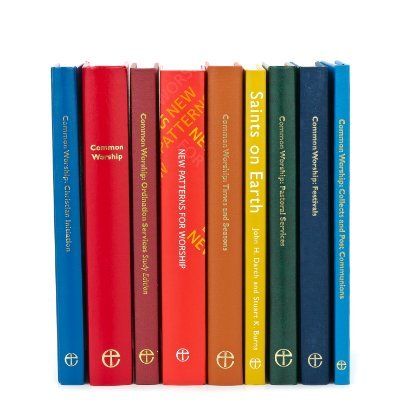
    The Church of England was replacing its main website, with a focus on better user experience, navigation and accessibility. One of the biggest pieces of content was the worship texts and resources: Common Worship, the Psalter, the Book of Common Prayer and more. Around 800 pages had to be moved from print and epub formats into a Drupal website… and every word and every piece of formatting appearing exactly as it does in the printed books, for legal reasons. That was my responsibility to deliver.
    The problem: a fixed deadline and a squeezed window

    The source material was 350 epub files and 300 images, and new site wasn’t ready to receive content until late in the schedule – but the launch date couldn’t move. Every delay elsewhere in the project came out of the time available to load the content.

    Preparing everything before the site was ready

    I extracted the HTML from the epubs and hired an XML specialist to convert the epub styling into styles the new site could use, so the formatting would exactly match the print books. I worked with the external development team to implement the formatting correctly on the new site. That meant the content was ready to go in the moment the platform could take it.

    Specifying what the site still needed

    I worked with the Church House digital communications team and technical staff from the external design agency to prepare the in-development site for this content. Where it couldn’t yet handle something, I specified the additional requirements, wrote bug reports and tested patches as they came through. I was also clear about which limitations I could work around and which were genuinely blocking, and I explained why, so nobody was surprised later.

    Working fast without losing accuracy

    When the window for uploading content finally opened, I brought in two more freelancers to enter content alongside me, and with triple capacity we managed the work so the output pace could be managed without compromising accuracy.

    The result

    The whole archive went live on deadline, and is part of the award-winning Church of England website.

  • Finding and moving 1,500 pieces of content nobody could locate

    Finding and moving 1,500 pieces of content nobody could locate

    Thy Kingdom Come had a new Drupal website, and everything on the old proprietary site needed to move over: pages, stories, resources and videos, in English and six other languages.

    The catch was that nobody had a complete picture of what was actually on the old site. Much of the content was hard to find and not indexed or searchable on the back end, and a move this size can’t be done reliably if you don’t know what you’re moving.

    Start with what exists

    Initially worked from a large data dump, then filled the gaps going throge the old site “line-by-line” manual downloading content so nothing was missed. I organised the content into folders and made a plain-text copy of every item in every language. Each file also listed the images and PDFs it depended on, so nothing had to be hunted for at upload time.

    Prepping the move

    I held off starting the move until the new site had been thoroughly tested. Spending a month moving content onto a build that might still need changes would have meant doing some work twice. The number of times each item had to be edited was kept low to make the move as cost effective as possible.

    Keep track of everything

    As each item went onto the new site, I logged it in one large spreadsheet covering every translation. I recorded any errors, which were either fixed on the spot or reported back to the developers then tracked and marked as fixed later. At any moment in time, I could pinpoint what had moved, what hadn’t, and what needed attention.

    The result

    Over about a month, I moved around 1,500 items: the main pages, stories, resources and video resources in English, around 300 translated pages in French, Portuguese, Spanish, Japanese, Korean and Swahili, and 870 translated snippets, form items and buttons. I also created 130 new pages that had never been translated before, using a translation tool. Also I got to subtitle the Pope!

  • Turning raw calling data into targeting the team could use

    Turning raw calling data into targeting the team could use

    In early 2020, I set up Momentum’s phone-banking infrastructure, connecting it to their membership database.

    After the 2020 general election, Momentum moved quickly to support the Rebecca Long-Bailey leadership campaign. This required rapidly pivoting their existing tools to a new focus, while carefully navigating data privacy rules.

    I set up a new NationBuilder instance and integrated it with CallHub to support this, and later documented the whole system in a manual and training video so the team could run it independently.

    Missing feedback loop

    Before I joined the team, each round of campaigns calling was configured manually, with no reference to how previous rounds had performed. Much of the time there was no feedback loop, while sometimes data was manually being re-uploaded to NationBuilder, that was slow, technically difficult and mistakes would cause database havoc like duplicate entries or lists.

    Agile Targeting

    The Nationbuilder-Callhub bridge allowed Momentum’s campaign managers to focus effort on the people and approaches most likely to connect. For example, prioritising reminder texts to people who’d already joined an action or targeting attendees based on proximity to an event, unlocking new ways to target the campaign with precision.